Plan-It - Designing Seamless Group Planning Inside WhatsApp
Reducing chaos, decision loss, and ambiguity in WhatsApp group planning.
00

problem
Group planning is deeply embedded in the apps people already use especially WhatsApp/imessage, which handles plans for birthdays, trips, dinners, exams, and more. It's the de facto platform for coordinating social lives. Messy Group chats - People rely on them as the primary planning tool, despite inherent limitations. Lost information - Links, decisions, times, tasks, and expenses get buried amidst casual conversation. Tools juggle - Users juggle five or more external tools (Notes, Google Maps, Splitwise, calendars).
solution
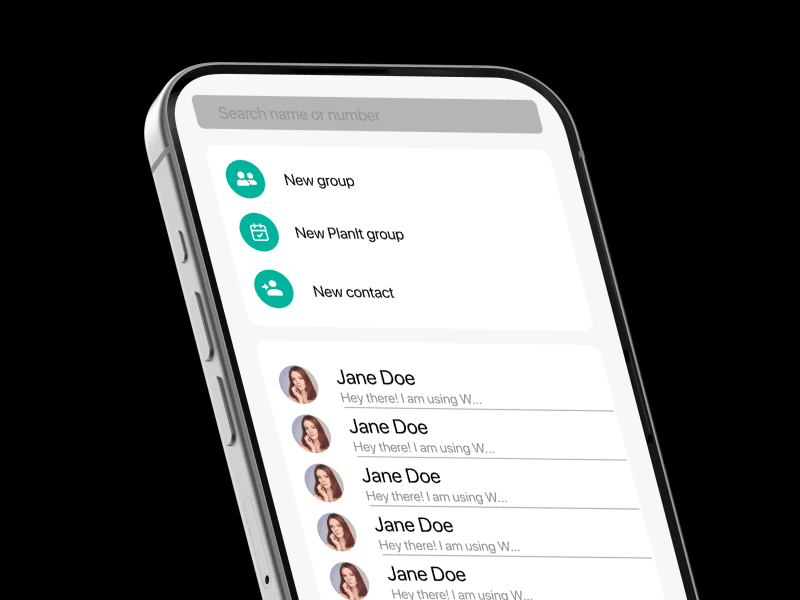
This concept involved introducing a new group type PlanIt Group with planning-specific features such as: - Built-in expense splits - Task assignments for roles like booking, coordination, reminders - An AI chat summarizer for long messages - A centralized Plan Shelf showing tasks, decisions, and shared links - Quick actions for polls, events, and recommendations Based on our surveys, secondary research, and primary user interviews, a clear pattern emerged: Users do not want another separate planning app. Most participants strongly preferred staying inside tools they already use, especially WhatsApp, which was the most common platform for communication, sharing links, coordinating dates, and even handling payments. Users expressed a desire for better organization and less chaos but did not want to switch apps or learn new systems. Because of this, we decided to integrate planning features directly into WhatsApp through the PlanIt group concept, meeting users where they already are and improving their existing workflows rather than replacing them.
The ideation phase was driven by patterns uncovered through our surveys, user interviews, affinity mapping, and established research in HCI, collaborative planning, and financial technologies. Across all data sources, a consistent theme emerged: group planning is messy because conversations, decisions, and responsibilities are scattered across long chats and multiple apps. One major insight which we got from our user interview was that users expressed a desire for smoother coordination but emphasized that they do not want another separate planning app. Since WhatsApp was the dominant platform used for planning among our participants, our ideas focused on enhancing planning within this familiar environment rather than replacing it.
You can also check out the full design documentation:
https://drive.google.com/file/d/1HjQQjwozdZTmAws5cagIUA7dkoZCYcyk/view?usp=sharing
So we came up with an idea called PlanIt. PlanIt is an extension to WhatsApp groups that introduces a new group type specifically tailored for planning. Instead of creating a standard WhatsApp group, users would have the option to create a PlanIt Group, which provides a more structured space for coordinating trips, events, and shared activities. This direction allowed us to enhance the familiar WhatsApp environment rather than asking users to adopt a new platform. Based on our research and the needs identified through interviews and surveys, we then developed a set of features that this PlanIt group would support.
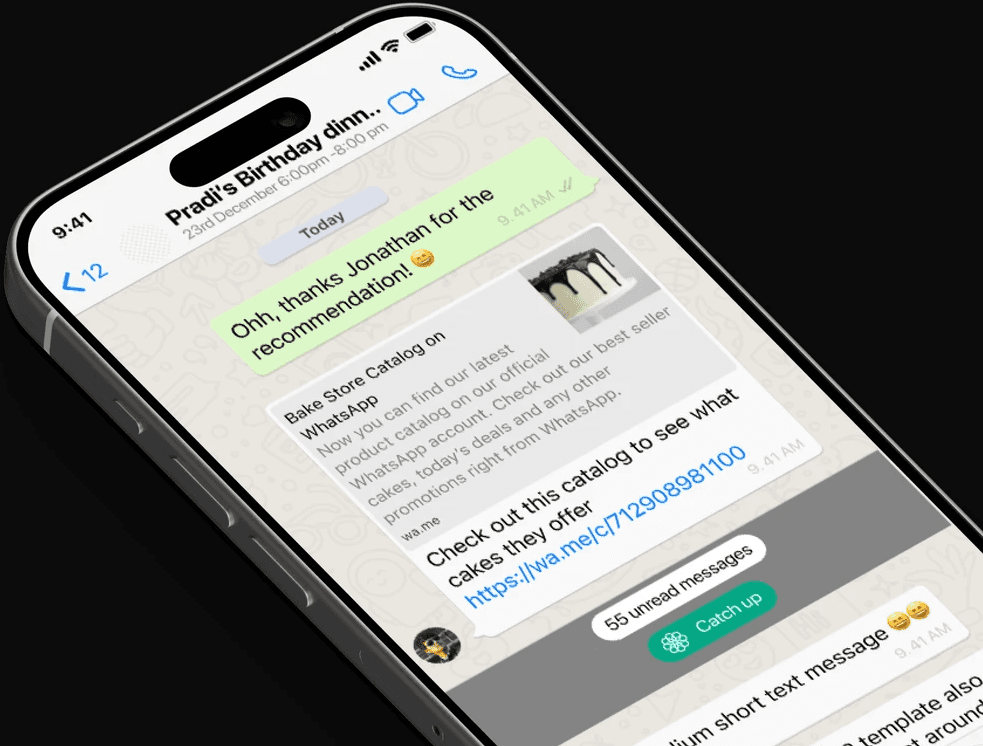
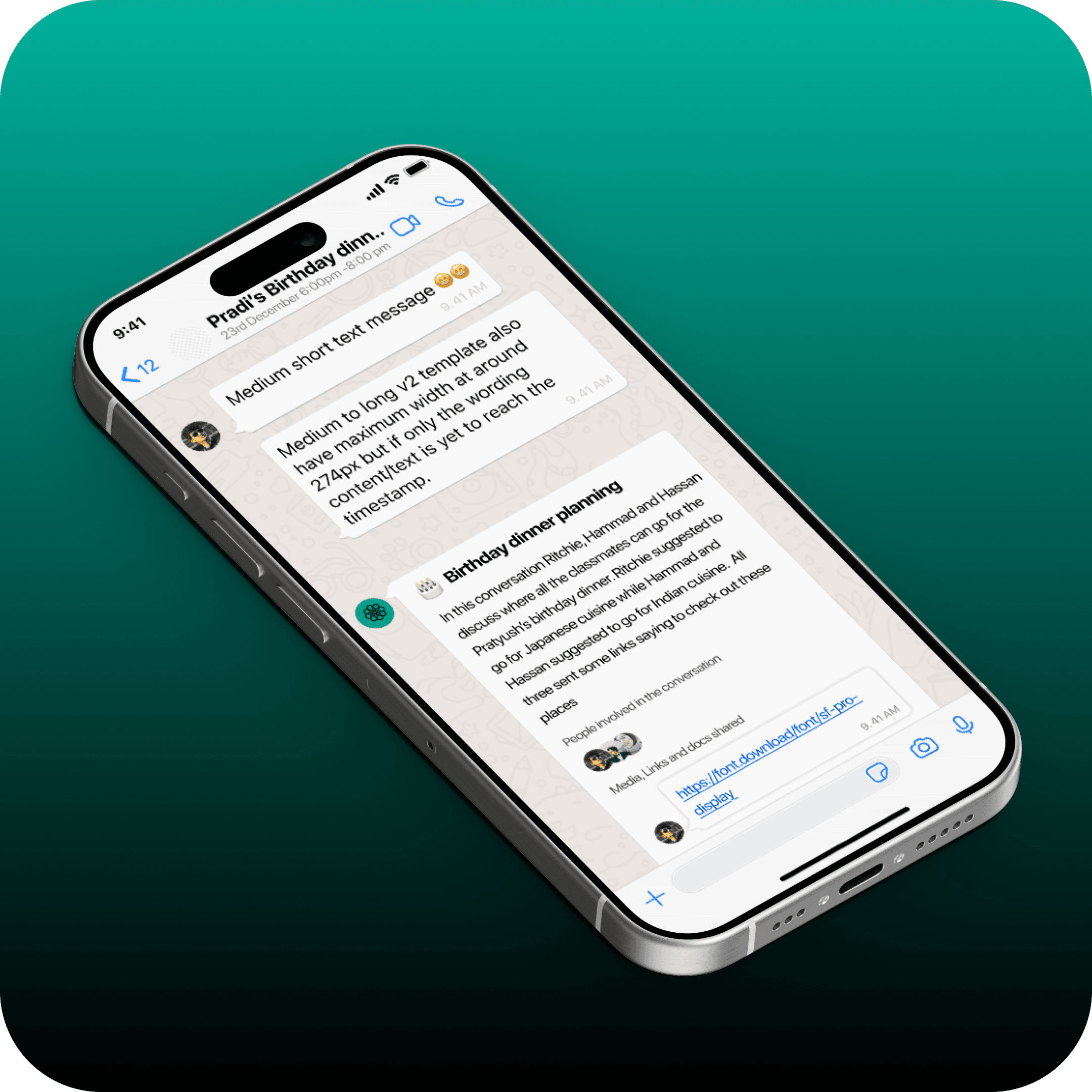
AI Chat Summarizer
Research + Data Insight:
Long message threads and information overload were major pain points identified in our surveys and interviews. Participants often missed key messages and had to scroll repeatedly or ask someone else to recap. Research on collaborative planning tools highlights the importance of shared visual understanding and reducing cognitive load by bringing clarity to dense communication spaces.
Idea Outcome:
An AI-based chat summarizer that extracts decisions, shared links, polls, and next steps from cluttered chats. This reduces catch-up time and ensures everyone stays aligned without manual summarizing.
Split Feature
Research + Data Insight:
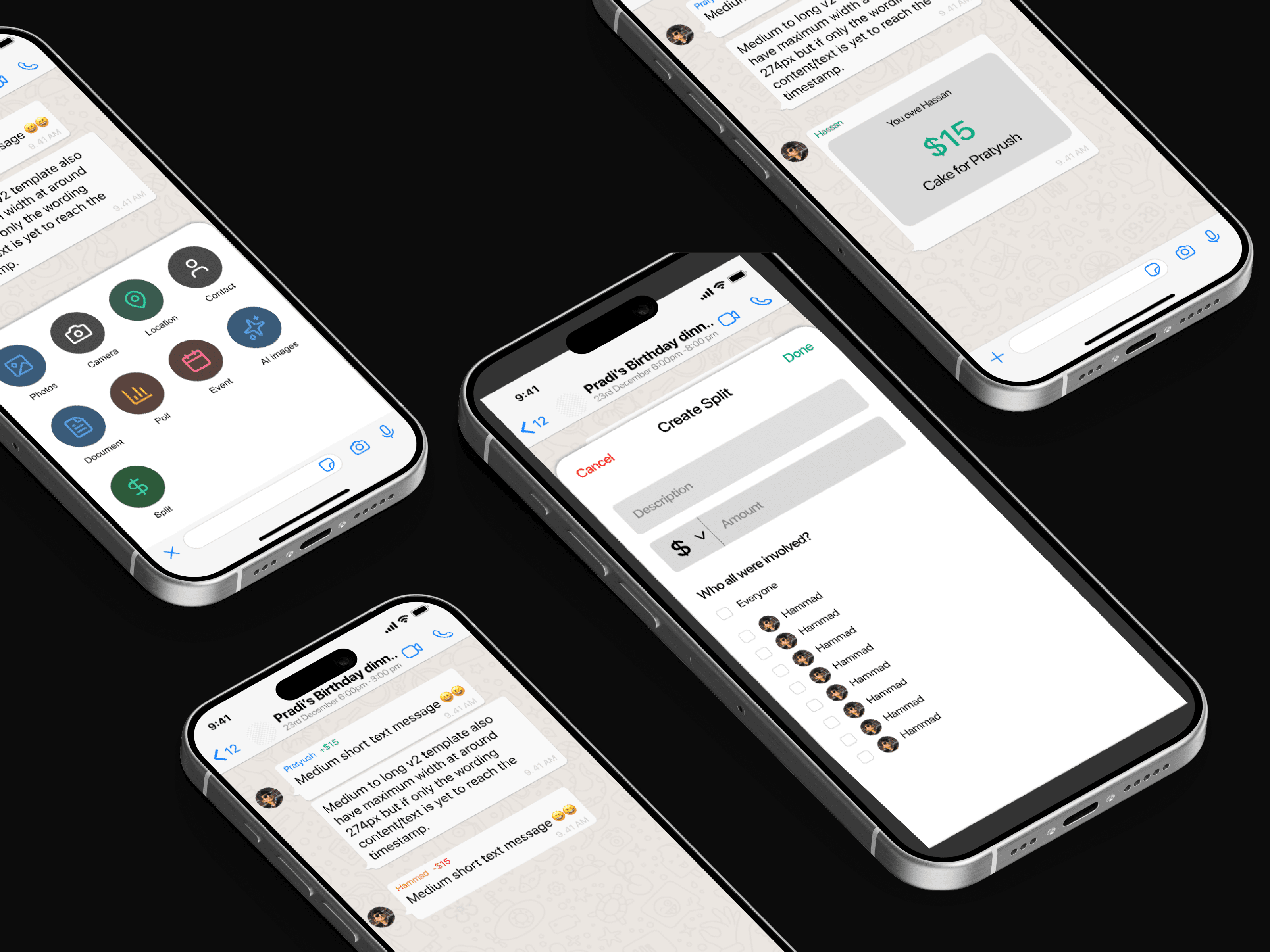
Interviews revealed that one trusted person usually handles payments, and money matters are often sensitive. Literature on digital payments emphasizes that money exchanges carry emotional weight, and that visibility and fairness must be handled carefully. Users want convenience without being publicly exposed in group settings.
Idea Outcome:
A private split feature where only members involved in the expense can see and settle payments. This improves fairness and reduces awkwardness, while keeping financial details discreet within WhatsApp.
Task Assignments
Research + Data Insight:
Interviews showed that roles are rarely assigned but often emerge informally leading to uneven workloads and unclear responsibility. Literature suggests stress that group planning benefits from clear division of labor, role visibility, and accountability to prevent confusion and improve coordination.
Idea Outcome:
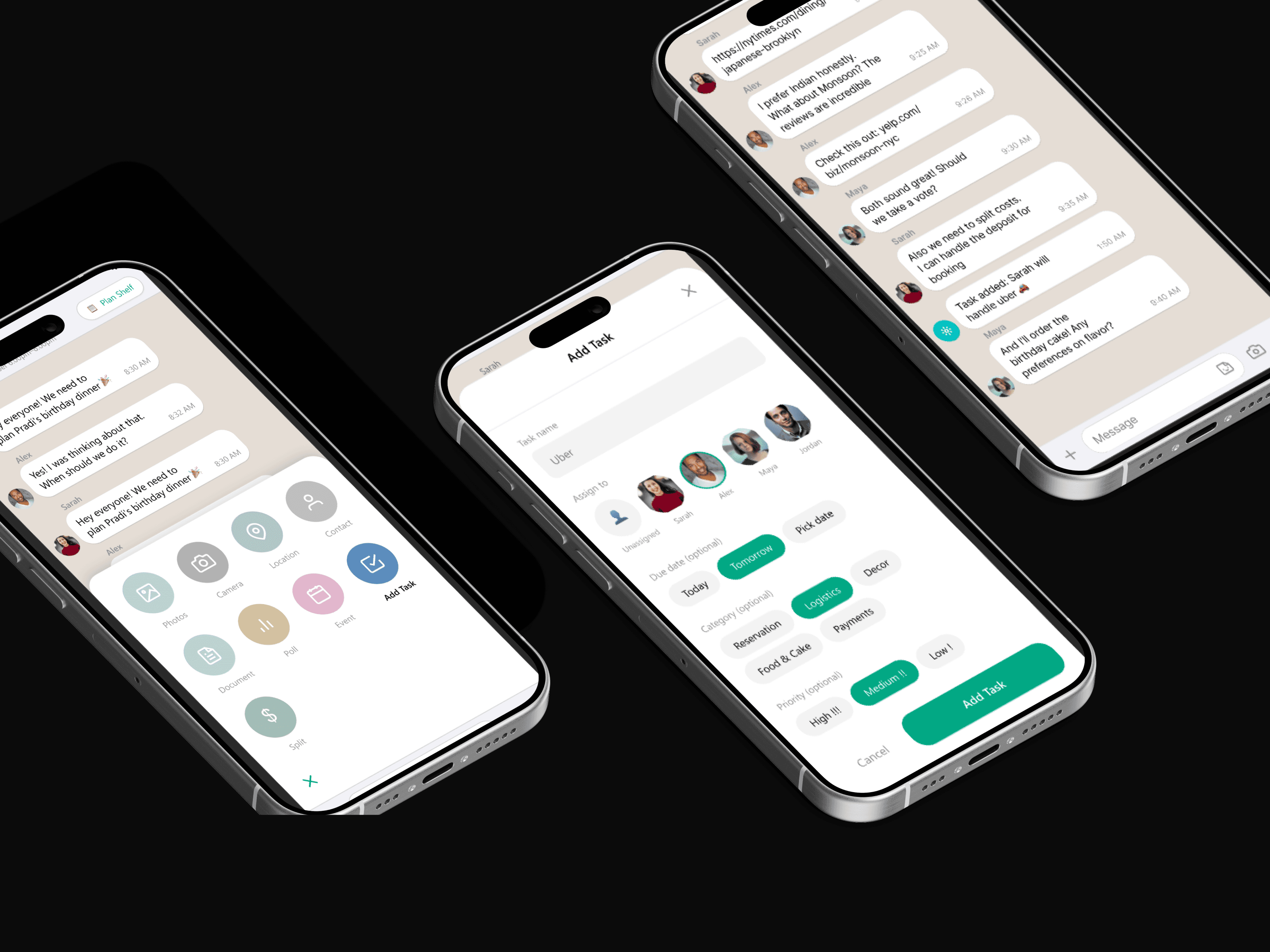
A lightweight task assignment system inside WhatsApp, allowing members to claim or assign responsibilities (bookings, reminders, logistics). This reduces ambiguity and supports smoother collaboration.
Plan Shelf
Research + Data Insight:
The Messy Middle of group planning is characterized by fragmentation, information spread across maps, websites, chats, and personal notes. Research papers highlighted that effective group tools must unify places, dates, maps, weather, and decisions into a single interface to avoid scattering.
Idea Outcome:
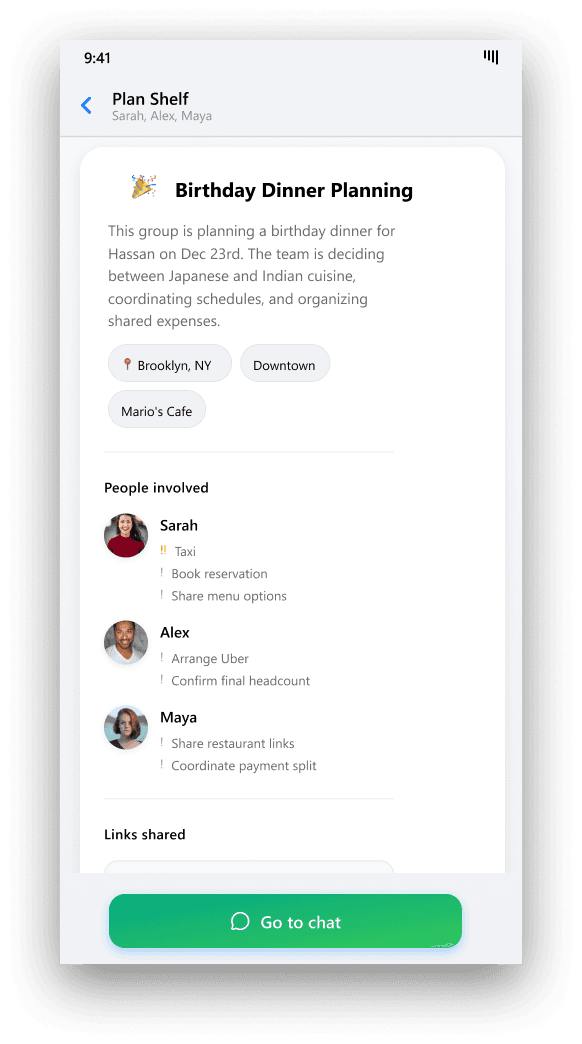
The Plan Shelf, a structured space within the group showing:
The overall plan (dates, locations, reservations)
All shared links and media
Who is responsible for what
Deadlines and progress
This solves the core issue of information being lost inside the chat.
year
2025
timeframe
16 days
Activities
Secondary Research (Research Papers), Competitive Analysis, User Interviews, UI Design , Usability Study
category
UI/UX