Digital Distractions - Behavior-Driven Focus Intervention System
Should Interventions be forceful or supportive?
00

problem
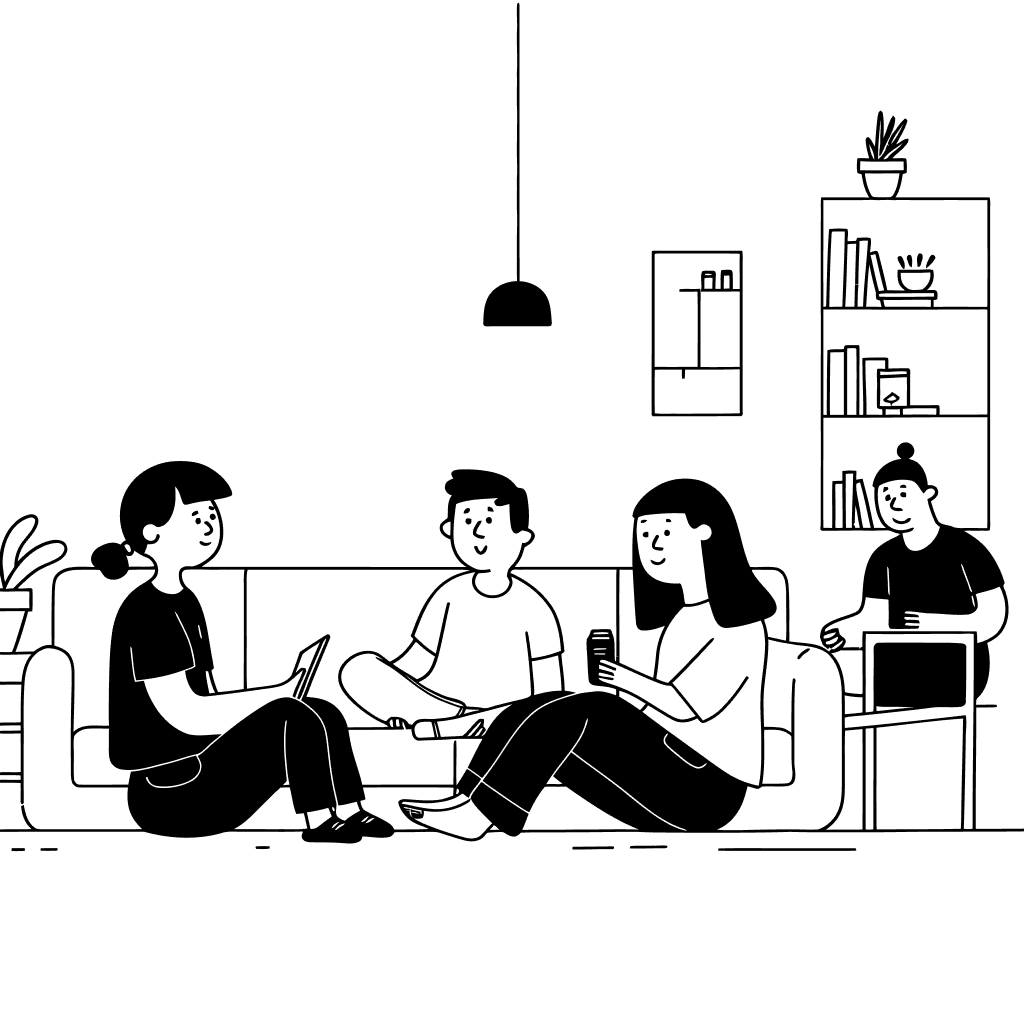
College students often fall into distraction loops when using social media during study sessions, especially in the evenings when willpower is low and deadlines increase pressure. Many existing tools rely on strict blocking or timers, which students report as ineffective, easy to bypass, or unsustainable long term. - Key research findings showed: - Students lose track of time while scrolling -Distraction often begins as emotional avoidance or boredom -Existing solutions only work temporarily -Users prefer supportive reminders over restrictive controls
solution
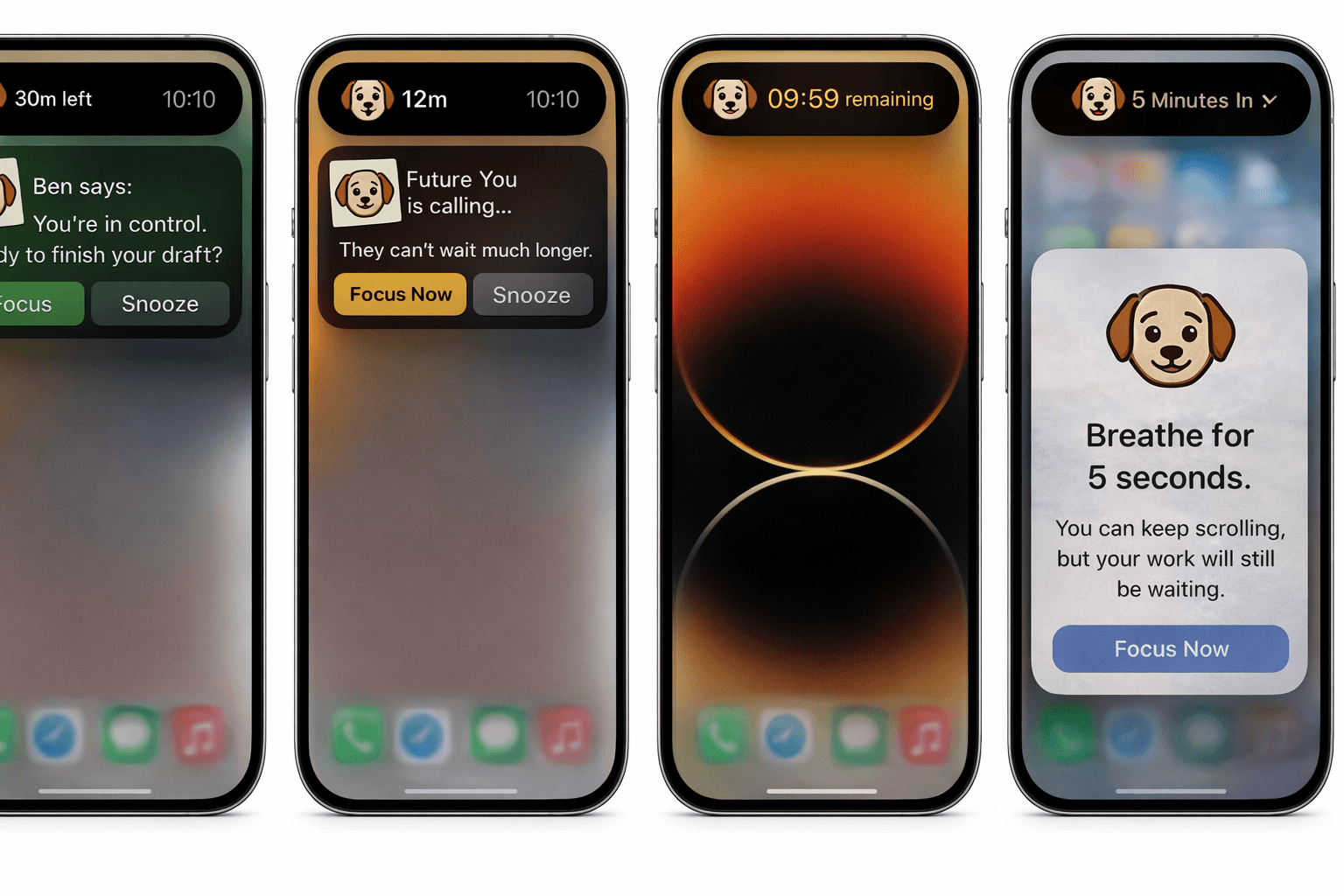
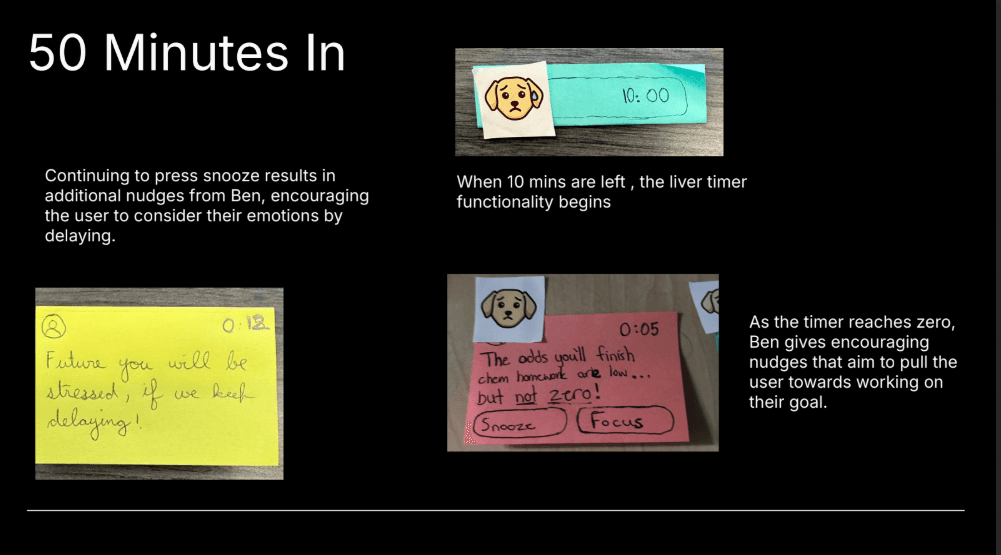
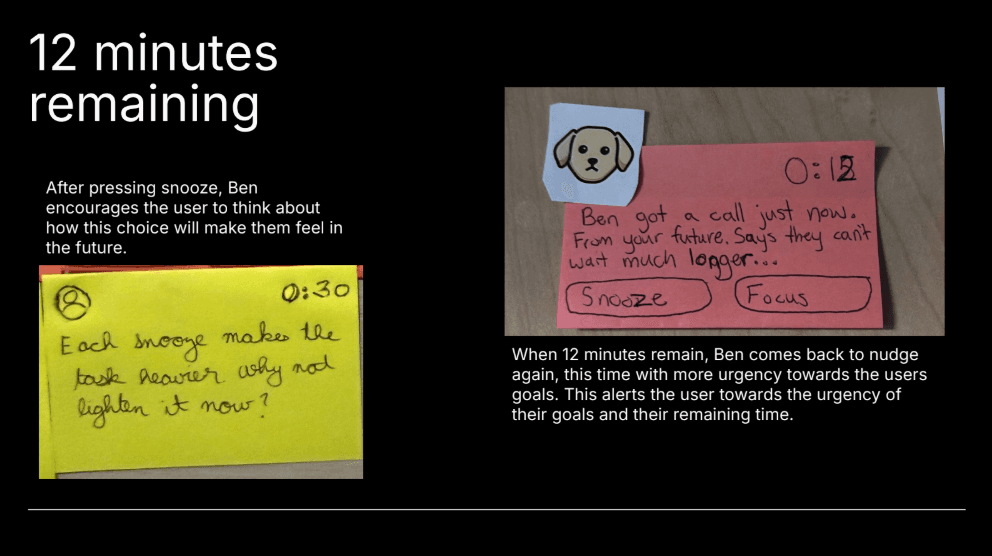
We designed a system that interrupts distraction cycles using gentle, timed nudges paired with a gamified avatar that reflects user behavior. Instead of blocking access, the intervention encourages reflection and goal awareness at strategic intervals, helping users shift from automatic behavior to intentional decision-making. The solution integrates: - Time-based reminders - Goal-linked prompts - Emotional feedback through an avatar - Increasing notification urgency near time limits
This project explores how design can support self-control rather than enforce it. We focused on students because they are uniquely affected by digital distraction while studying and frequently struggle to exit social media loops. By studying real behaviors, emotions, and failed attempts at self-regulation, we aimed to design an intervention that feels supportive rather than punitive.
You can also check out the full design documentation:
https://drive.google.com/file/d/1HjQQjwozdZTmAws5cagIUA7dkoZCYcyk/view?usp=sharing
Research
We conducted primary research with university students through questionnaires and interviews to understand distraction triggers, emotional states, and existing coping strategies. Participants consistently reported losing track of time, using social media as an emotional escape, and abandoning current focus tools because they felt rigid or ineffective.
Secondary research examined behavioral theories and existing systems, including Dual Systems Theory and Self-Determination Theory, which informed our design approach toward reflective decision-making and intrinsic motivation.
Analysis
We synthesized qualitative data using affinity mapping, grouping responses into themes such as triggers, emotional states, devices, failed solutions, and user needs. This helped transform scattered observations into actionable insights and defined a clear problem space.
Prototyping
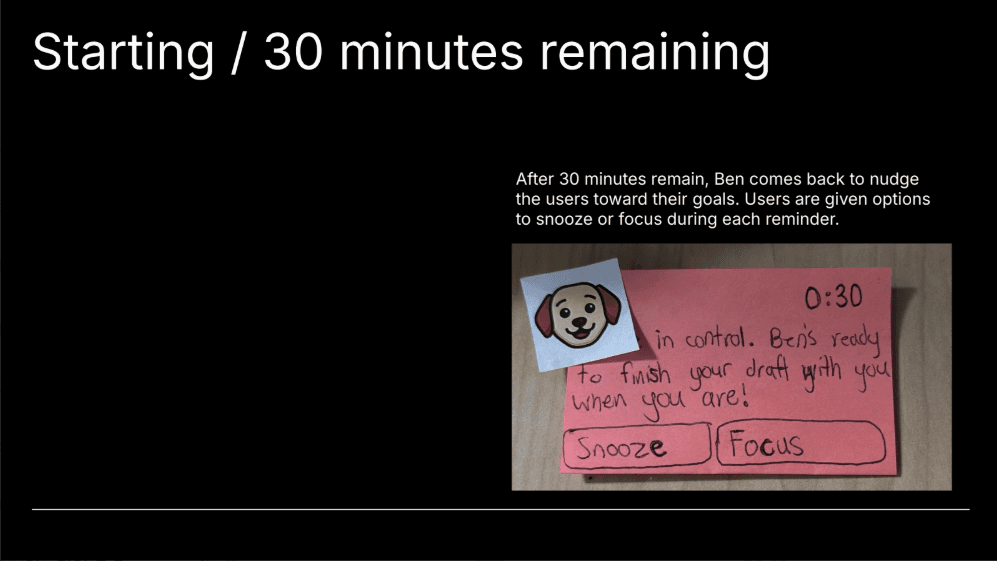
We created low-fidelity paper prototypes simulating phone notifications and timers to test interaction timing, messaging tone, and decision points. These prototypes allowed quick iteration before investing in higher fidelity builds.
Testing
Usability testing with target users evaluated clarity, motivation, timing, and perceived usefulness of interventions. Participants understood the system quickly and found reminder-based interventions more motivating than strict enforcement tools.
Key insights:
Users preferred customizable intervals
Early notifications should be minimal
Accountability works better than strict limits
Task-based prompts feel more meaningful than time-based ones
year
2025
timeframe
16 days
Activities
Secondary Research, Primary Research, Affinity Mapping, Concept Sketching, Paper Prototyping, Usability Testing
category
UI/UX
01
02
03
04